Building the Box: Five Takeaways from TreviPay Crossroads 2026
At TreviPay's 2026 B2B payments conference, industry leaders explored how connected payments infrastructure, AI and better buyer experiences can help businesses grow.
By TreviPay
In 1956, trucking entrepreneur Malcolm McLean helped transform global trade with a simple innovation: the shipping container. But as TreviPay CEO Brandon Spear explained at Crossroads 2026, the real breakthrough came when the industry established common standards that allowed containers to move between ships, trucks and ports.

Throughout the event, that shipping container became known simply as “the box.” It served as a recurring reminder of what happens when an industry moves beyond individual innovations and builds the infrastructure needed for them to work together.
Spear sees a similar opportunity in B2B payments. New technologies are emerging, but disconnected systems, inconsistent standards and complex workflows continue to limit their potential.
That challenge set the tone for TreviPay Crossroads 2026, held November 8–10 in Kansas City. Leaders from across finance, sales and technology explored how payments, invoicing, credit and data can work together to support business growth.
Across two days of discussions, five themes emerged.
Key Takeaways from Crossroads 2026
- Payments are part of the entire commercial relationship. Connecting payments, credit and order-to-cash processes can improve cash flow, reduce friction and support stronger customer relationships.
- Every B2B transaction has two customers. Buyers need flexibility and control, while suppliers need payment certainty and predictable cash flow.
- AI needs a clear purpose. Automation can improve efficiency and decision-making, but human judgment and trustworthy data remain essential.
- Payment innovation and regulatory change require preparation. Stablecoins, agentic commerce and evolving e-invoicing mandates are changing how businesses approach transactions, compliance and technology planning.
- Collaboration determines whether innovation scales. Successful programs require alignment across finance, sales, technology and the broader B2B ecosystem.
1. Connecting Payments, Credit and Commerce to Drive Growth
Payments have traditionally been treated as a process that happens after a sale. Crossroads speakers challenged that separation, making the case for connected payments infrastructure that supports the entire commercial relationship, from purchasing and credit to invoicing and collections.
During the ‘‘B2B Growth Outlook’’ panel, Rebecca Meeker of Mastercard emphasized the value of embedding payments directly into business workflows rather than managing them as disconnected activities.

The ‘‘Beyond DSO’’ session extended that thinking to accounts receivable (A/R). Measuring days sales outstanding (DSO) is important, but it doesn't capture the full cost of manual processes, invoice disputes or payment friction.
For finance leaders, a broader view of order-to-cash means evaluating:
- Cash flow: How reliably can the business predict and collect payments?
- Efficiency: How much time goes toward resolving invoice and reconciliation issues?
- Growth: Do payment options and credit terms help customers buy?
- Customer relationships: Does the payment experience make it easier to do business together?
A more connected approach to order-to-cash can help finance teams manage cash flow and reduce manual work, while making it easier for customers to do business.
2. Designing B2B Experiences Around People on Both Sides of the Transaction
Business buyers expect convenient purchasing experiences, but their needs extend beyond a simple checkout.
In the ‘‘What Corporate Buyers Want’’ panel, representatives from NTI, United Airlines and HubNetic discussed the importance of payment choice, purchasing controls and processes that fit existing business operations.
The ‘‘Every Transaction Has Two Customers’’ panel added another perspective: suppliers have their own requirements.
| Buyers Need | Suppliers Need |
|---|---|
| Flexible payment options and terms | Predictable cash flow |
| Purchasing controls and approvals | Payment certainty |
| Clear invoices and transaction records | Efficient collections and reconciliation |
| Convenient purchasing | Confidence to serve and grow customer relationships |
A payment experience that works for one side but creates problems for the other is unlikely to deliver lasting value.
This focus on people also emerged in the Day 1 fireside chat. TreviPay's Martha Salinas highlighted the human element of the conference, including the importance of understanding different customer segments and bringing industry participants together.
The implication for businesses is straightforward: payment programs should reflect how customers and employees actually work, not simply how a technology platform operates.
3. Putting AI and Data to Work Where They Deliver Measurable Value
Artificial intelligence was a recurring topic at Crossroads, but speakers repeatedly returned to practical applications and measurable outcomes.
During the ‘‘Risk and Fraud Spotlight’’, TreviPay leaders discussed how machine learning supports credit decisioning and fraud detection. They also considered where generative AI could help teams manage document-intensive work.
The Day 2 technology keynote, led by TreviPay Chief Product and Technology Officer Dan Zimmerman, explored additional applications, including how TreviPay's Growth Center uses AI-powered insights to identify opportunities within existing customer accounts.
Across the discussions, three distinctions mattered:
- Machine learning can help identify patterns, assess risk and support decisions using historical data.
- Generative AI can help employees work with information and automate selected administrative tasks.
- Agentic AI could take on more autonomous purchasing and payment workflows, but requires reliable data, controls and clear accountability.
These technologies are at different stages of maturity. Businesses need to distinguish established applications from emerging possibilities.
That point was reinforced in the ‘‘Finance and Tech track takeaways’’, where speakers emphasized trust, critical thinking and the importance of understanding why a process should be automated.
The goal is to give people better information and more time for work that requires judgment.
4. Preparing for Payment Innovation and Regulatory Change
Emerging payment technologies are expanding the options available to businesses. Their value, however, depends on whether they solve a real operating problem.
During the Stablecoin Impact and Outlook panel, representatives from Circle, BTM Energy/HDAX and TruckCoinSwap explored use cases where digital settlement could help address payment delays and liquidity challenges.
The Day 2 keynote also introduced plans for a TreviPay and Circle pilot involving blockchain-based invoicing and settlement, with the potential to improve visibility into invoice approvals, disputes and payments.
These developments remain distinct from widespread B2B adoption. Companies still need to consider integration, risk, compliance and the practical needs of their trading partners.
Regulation presents another challenge.
In the ‘‘E-Invoicing and Global Regulatory Outlook’’ panel, Frank Ludwig of Approvis and Tom Skomba of Accenture discussed how evolving European requirements are creating additional considerations for companies operating across borders.
For businesses evaluating these changes, the immediate priorities are to:
- Identify payment and invoicing processes creating unnecessary cost or delays.
- Understand which regulatory requirements affect their markets.
- Evaluate new technologies against specific business needs.
- Build systems flexible enough to accommodate future changes.
Businesses need payment and invoicing infrastructure that can accommodate new technologies and regulatory requirements without adding unnecessary complexity for buyers and suppliers.
5. Building Trust and Collaboration into B2B Commerce
One of the strongest messages from Crossroads was that successful modernization requires more than technology.
During the ‘‘Brand Leaders Panel’’, representatives from Lenovo, Red Wing Shoe Company and International Motors discussed the coordination required to implement and scale B2B payment programs.
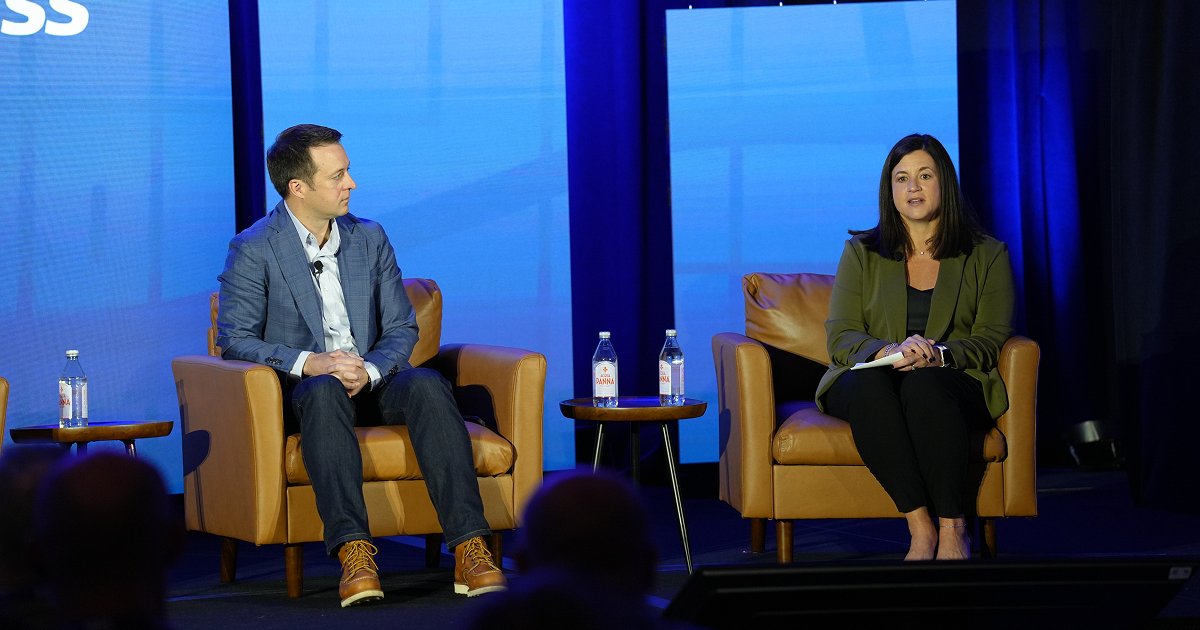
The industry spotlights reinforced that lesson. Amy Morel of International Motors described customer relationships extending beyond the initial vehicle purchase into parts, service and aftermarket support, where accurate billing and reliable operations remain important.
The closing Finance, Sales and Tech track summaries brought these perspectives together.
Three principles stood out:
- Economics must lead. Technology investments need a clear connection to revenue, cash flow, risk or operating efficiency.
- Trust remains essential. As automation expands, businesses still need transparency, accountability and human judgment.
- Change requires collaboration. Finance, sales, technology and customer-facing teams must work together to make new processes successful.
The ‘‘Day 1 fireside chat’’ and ‘‘conference wrap-up’’ also emphasized the value of Crossroads as a forum for sharing experiences across industries and disciplines.
That collaboration is especially important as B2B commerce becomes more connected. No single company or technology can resolve every challenge across the buyer-supplier relationship.
What's Next for B2B Commerce?
Crossroads 2026 showed how much opportunity exists to improve the systems supporting business transactions, from established order-to-cash processes to emerging AI and digital payment technologies.
But the conference also reinforced a lesson from Brandon Spear's opening remarks: innovation alone isn't enough. The shipping container changed global commerce because the industry developed common standards and systems around it.
B2B commerce needs its own version of “the box.” That means connecting technology, data and processes in ways that make it easier for buyers and suppliers to do business together.
The companies that help establish those connections will be better positioned to turn emerging technologies into practical commercial value.