
Turning Your Order-to-Cash Program into a Growth Engine
For years, artificial intelligence in finance has been positioned primarily as a tool for efficiency. Automating manual processes, improving reconciliation and accelerating workflows have been the focus and those improvements matter.
Those improvements matter. But efficiency alone doesn’t drive growth.
In B2B payment programs, the real risk shows up somewhere else. Buyer engagement slows. Spending declines gradually. Relationships weaken before sales teams ever see a clear signal to act. By the time those issues show up in traditional reporting, revenue is already at risk.
Sustainable growth isn’t just about acquiring new buyers. It’s about protecting existing relationships and recognizing early signs of disengagement before they turn into lost revenue.
This is where AI-powered intelligence becomes essential but only when it’s applied to the right problem. Not just streamlining workflows but interpreting what the data is already telling you. Which accounts are going quiet. Where behavior is changing. Where there’s still room to grow.
This is where operational data becomes commercial insight.
When applied effectively, AI turns transactional and behavioral data into predictive signals. It turns transactional and behavioral data into predictive insights that help commercial and finance teams recognize opportunities earlier, engage buyers more intentionally and strengthen long-term program performance.
Growth Center was built with that in mind. Not as another layer of automation, but as a way to surface risk and opportunity sooner so teams can act while it still matters.
Introducing Growth Center
Growth Center is a set of AI-powered capabilities embedded within the TreviPay platform. It’s designed to help clients use their existing net terms program data to do something most A/R systems can’t: drive sales.
At its core, Growth Center connects transactional data, buyer behavior and predictive models to surface where revenue is at risk and where it can grow. It turns A/R data into something actionable for both finance and commercial teams.
Instead of reacting to what already happened, teams can use that data to act earlier in the buying cycle when there’s still an opportunity to influence spend.
It’s built to identify:
- Buyers who represent near-term growth opportunities within the net terms program
- Buyers who may need attention before spend declines or goes dormant
- Specific actions teams can take to increase purchasing activity and expand revenue
The shift is straightforward, but important. A/R data has traditionally been used to track payments. Here, it’s used to drive demand.
The goal isn’t just better visibility or engagement. It’s to help organizations move from reactive program management to proactively increasing spend, strengthening buyer relationships and growing revenue within the customers they already have.
Why Insights Alone Don’t Drive Growth
Many organizations already have access to customer data. The challenge is turning that information into action.
Insights alone do not grow revenue. Growth happens when teams can respond at the right moment, with the right intervention.
Growth Center is designed to close that gap by pairing predictive insights with tools that allow organizations to act quickly.
This also changes how finance and commercial teams interact. Driving growth on a net terms program often requires investment, whether that’s funding incentives, launching targeted campaigns or re-engaging buyers. Finance teams need visibility and control to support those decisions. Growth Center makes that possible by tying those actions back to measurable outcomes, so teams can invest in growth with confidence.
Traditionally, accounts receivable teams communicate with sales when there is a problem often related to unpaid invoices or credit concerns. With better data and predictive insights, those same teams can shift the conversation from reactive problem-solving to proactively identifying opportunities to drive revenue.
When A/R data begins identifying opportunities rather than risks, the role of financial operations shifts from reactive oversight to proactive collaboration.
The Four Modules Behind Growth Center
Growth Center is built around four integrated modules designed to help organizations identify opportunities and act on them quickly.
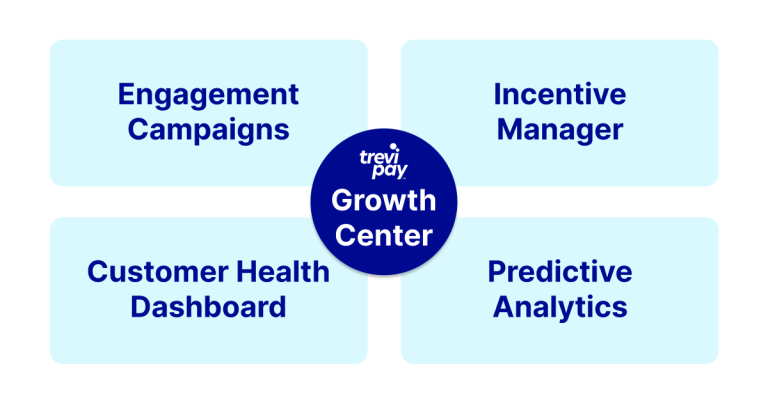
Engagement Campaigns
This module focuses on targeted engagement campaigns.
Sometimes buyers simply need a reminder that they have an established purchasing relationship and available credit. Campaigns that highlight “open-to-buy” credit availability can help re-engage dormant accounts.
In testing with a large U.S. retailer, targeted open-to-buy reminders sent to inactive buyers generated more than $100,000 in sales within eight days.
These types of campaigns allow sellers to reconnect with buyers in a targeted and scalable way.
Incentive Manager
Incentives can be a powerful growth lever but only when they are targeted, measurable and governed.
Too often, rebate programs are hard to manage and even harder to evaluate. Without clear visibility, it’s difficult to know what’s driving incremental spend versus what’s just adding cost.
Incentive Manager is designed to change that.
It allows sellers to configure, manage and measure incentive programs directly within the B2B payment experience, tying them to real buyer behavior and transactions. The goal is simple: encourage additional spend while maintaining control over performance.
In early testing, TreviPay has seen measurable results. In one beta program, a 2% rebate offered to select net terms buyers contributed to 14% year-over-year growth over 12 months.
Just as important, it made performance visible. More importantly, the program delivered clear insight into what worked and why.
By pairing incentives with real‑time measurement, organizations can move beyond one-off promotions and build repeatable strategies that strengthen engagement and support sustainable growth.
Customer Health Dashboard
The Customer Health Dashboard shows how each buyer relationship is actually performing.
It uses behavioral signals and program data to surface changes in engagement, not after the fact, but as they’re happening.
That shift matters.
Instead of reacting to inactivity, teams can see when buyer behavior starts to change and act before spend declines.
Predictive Analytics
The fourth module focuses on predictive analytics, which uses machine learning models to identify buyers at risk of going dormant.
Instead of reacting after engagement declines, predictive models highlight accounts that may soon become inactive. Early testing shows these models can predict dormancy with approximately 72% accuracy when back-tested against historical data.
This allows organizations to intervene earlier with targeted outreach, incentives or campaigns.
A New Role for Accounts Receivable Data
One of the more interesting shifts Growth Center introduces is how accounts receivable data can be used.
Traditionally, A/R data is used to identify risks, late payments or compliance issues. Those insights remain important. But the same data can also reveal opportunities.
By analyzing spending patterns, credit usage and engagement signals, A/R platforms can surface insights that help sales teams identify growth opportunities.
This changes the conversation between finance and commercial teams.
Instead of simply notifying sales when a payment issue arises, finance teams can now help surface opportunities to drive revenue. The data that once focused primarily on risk management can also support business growth.
AI as a Growth Engine
Artificial intelligence is often associated with efficiency gains. Automation can reduce manual effort and improve scalability across finance operations.
But AI also improves decision quality.
When organizations have better access to data, predictive insights and engagement tools, they can respond more effectively to changes in buyer behavior.
Growth Center reflects this broader view of AI. Rather than focusing only on automation, it applies intelligence to help businesses protect revenue, strengthen buyer relationships and uncover growth opportunities.
In that sense, AI becomes more than a productivity tool. It becomes a strategic capability for managing B2B programs.
Looking Ahead
Growth Center reflects a broader shift in how B2B programs are managed.
AI is no longer just about automation. The advantage comes from using data and intelligence to anticipate buyer behavior, act earlier and strengthen commercial relationships before revenue is at risk.
That shift also changes how financial data is used. What was once focused on risk and reporting can now surface growth opportunities and align finance and commercial teams around a shared objective: increasing spend and protecting buyer relationships.
Growth Center is being rolled out in phases throughout 2026, with new capabilities expanding the platform over time. As TreviPay continues to invest in AI and data-driven capabilities, the focus remains consistent, helping businesses grow while improving the buyer experience.
We’ll continue this conversation at TreviPay Crossroads, where we’ll share more about how AI, predictive insights and partner ecosystems are shaping the future of B2B payments and commerce.

Learn More About Growth Center at TreviPay’s Crossroads Conference